- Clinical studies
Wearable auricular vagus nerve stimulation
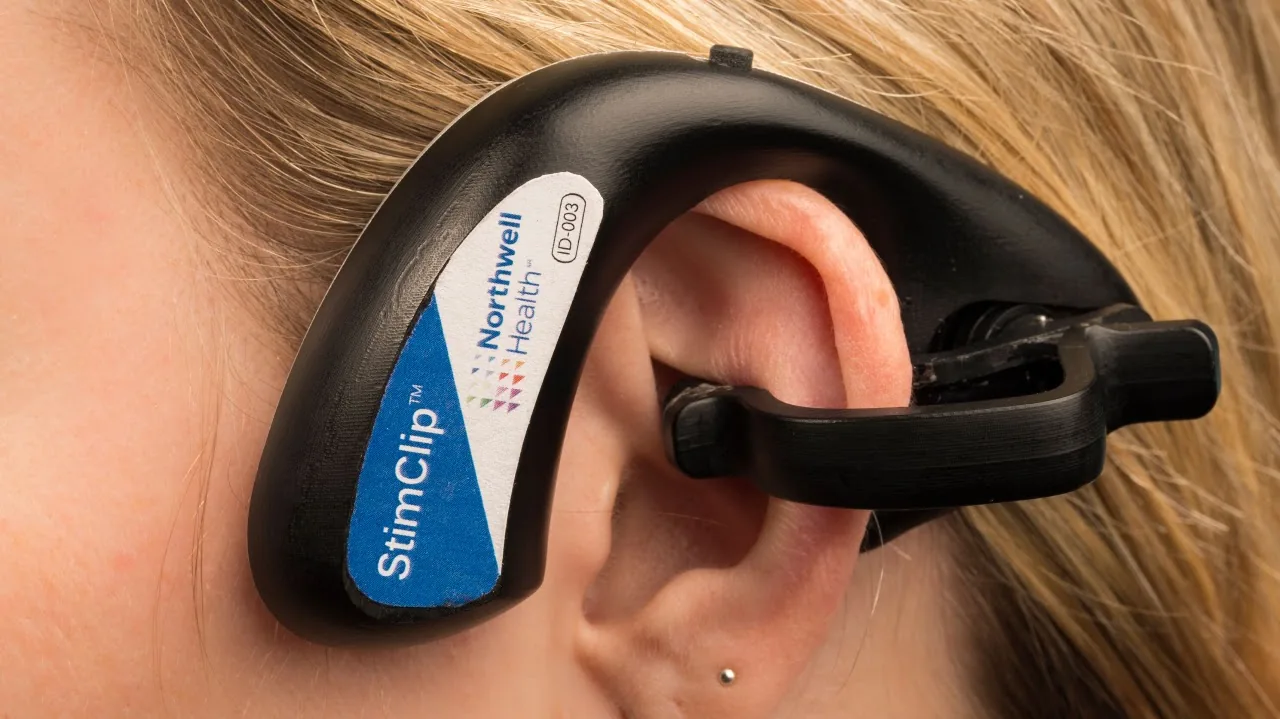
An over-the-ear device that stimulates the auricular branch of the vagus nerve through the skin, used in clinical studies at Northwell Health.
The problem
Implanted vagus nerve stimulators require surgery, which slows the testing of new therapies in patients.
Our approach
A wireless, all-in-one stimulator for transcutaneous auricular vagus nerve stimulation (taVNS). It clips over the ear and stimulates skin supplied by the auricular branch of the vagus nerve, so new findings can reach clinical studies quickly.
A wireless stimulator that clips over the ear
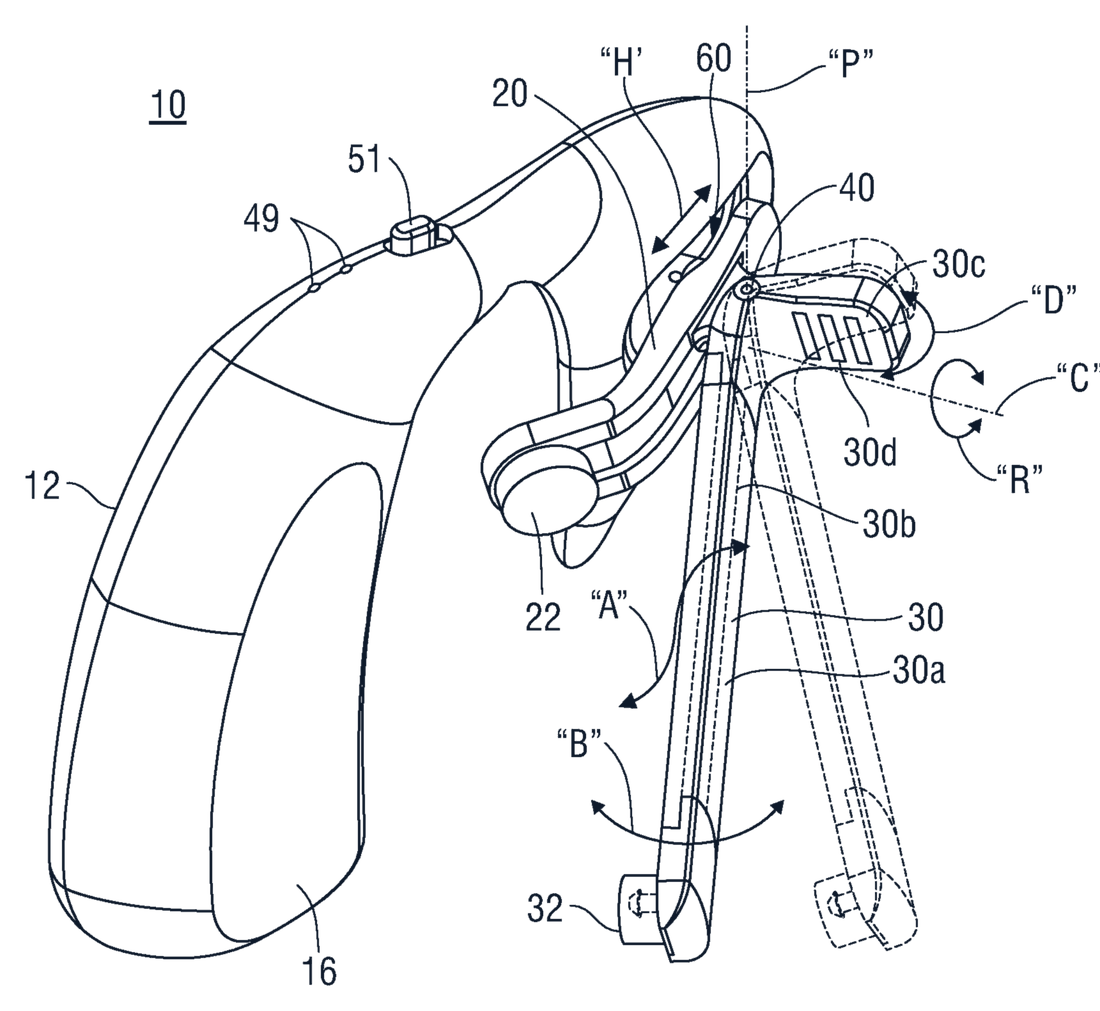
The stimulator is a wireless, all-in-one device co-designed by engineers at the Feinstein Institutes and MIDI Product Development Corporation, which fabricated it. A spring-loaded clip fits over the ear and holds a pair of conductive silicone electrodes against the cymba conchae. The electrodes can be rotated and repositioned to fit different ears.
A tablet app controls the device over Bluetooth, setting the amplitude, onset, pulse width, frequency, burst pattern and duration of stimulation.
Stimulation timed to movement during stroke rehabilitation
In a randomized, sham-controlled study of 36 patients with chronic stroke, the stimulator delivered 500 ms bursts at 30 Hz, triggered by a visual cue just before each arm-extension movement during robotic training. Both groups improved, and compared with sham, the active group showed a significant reduction in wrist and hand spasticity at discharge.
taVNS reduced pain and fatigue in a pilot trial in lupus
In a randomized, double-blind, sham-controlled pilot trial in 18 patients with lupus and musculoskeletal pain, four days of taVNS reduced pain and fatigue compared with sham stimulation. A follow-on trial in lupus, with 28 days of daily stimulation, is now recruiting. With clinical colleagues, taVNS has also been studied in children with nephrotic syndrome.
What the patent describes
The device's two surface electrodes are biased toward each other and offset, so each rests on ear tissue supplied by the auricular branch of the vagus nerve, which they stimulate through the skin. The patent also describes a closed-loop system in which a smart device adjusts stimulation using biomarkers from a separate monitoring device, information about the patient and user input. Applications it names include high blood pressure, depression, high blood glucose and tinnitus.
Clinical studies
Studies of transcutaneous vagus nerve stimulation, at the ear or the neck, in which the lab has taken part, with their status on ClinicalTrials.gov as of September 2026.
| Trial | Study | Status | Publication |
|---|---|---|---|
| NCT06987565 | Transcutaneous vagus nerve stimulation for pain and fatigue in lupus | Recruiting | — |
| NCT04159909 | Auricular stimulation for acute alcohol withdrawal | Withdrawn | — |
| NCT05710640 | Cervical transcutaneous stimulation in juvenile idiopathic arthritis | Terminated | — |
| NCT04169776 | taVNS for pediatric nephrotic syndrome | Completed | Merchant et al., Bioelectron Med 2022 |
| NCT03592745 | taVNS with robotic training for arm function after stroke | Completed, results posted | Chang et al., Front Neurosci 2021 |
| NCT02822989 | Auricular stimulation for musculoskeletal pain in lupus | Completed | Aranow et al., Ann Rheum Dis 2021 |
| NCT02910973 | Auricular stimulation and the cholinergic anti-inflammatory pathway | Completed | — |