
- Preclinical
Implant packaging for small animals
Light polymer enclosures, coatings and feedthroughs that keep implant electronics working through chronic studies in mice.
The problem
Biology is a wet world; electronics come from a dry one. An implant's package has to keep its electronics dry in the body while staying small and light enough for a mouse to carry.
Our approach
Polymer-based encapsulation sized for mice, using epoxy and additive manufacturing, tested in accelerated saline soaks and in chronic implantation.
Metal and ceramic packaging is too costly and heavy for preclinical devices
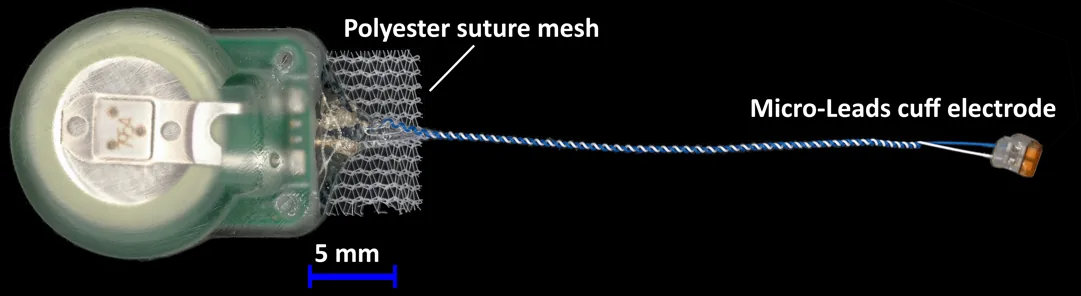
Clinical implants are sealed in metal cans with ceramic feedthroughs. For devices implanted in mice, that approach is too expensive and too heavy, so we use polymer-based encapsulation instead, including epoxy and additive manufacturing. Our 2022 system already used a two-part 3D-printed shell with a polyester suture mesh.
How the package is built
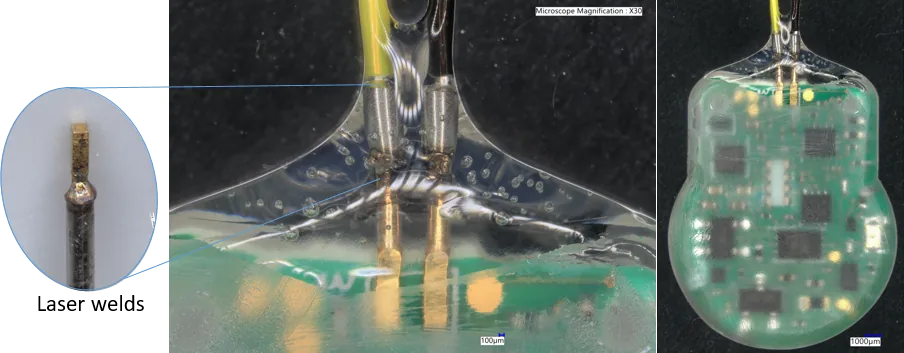
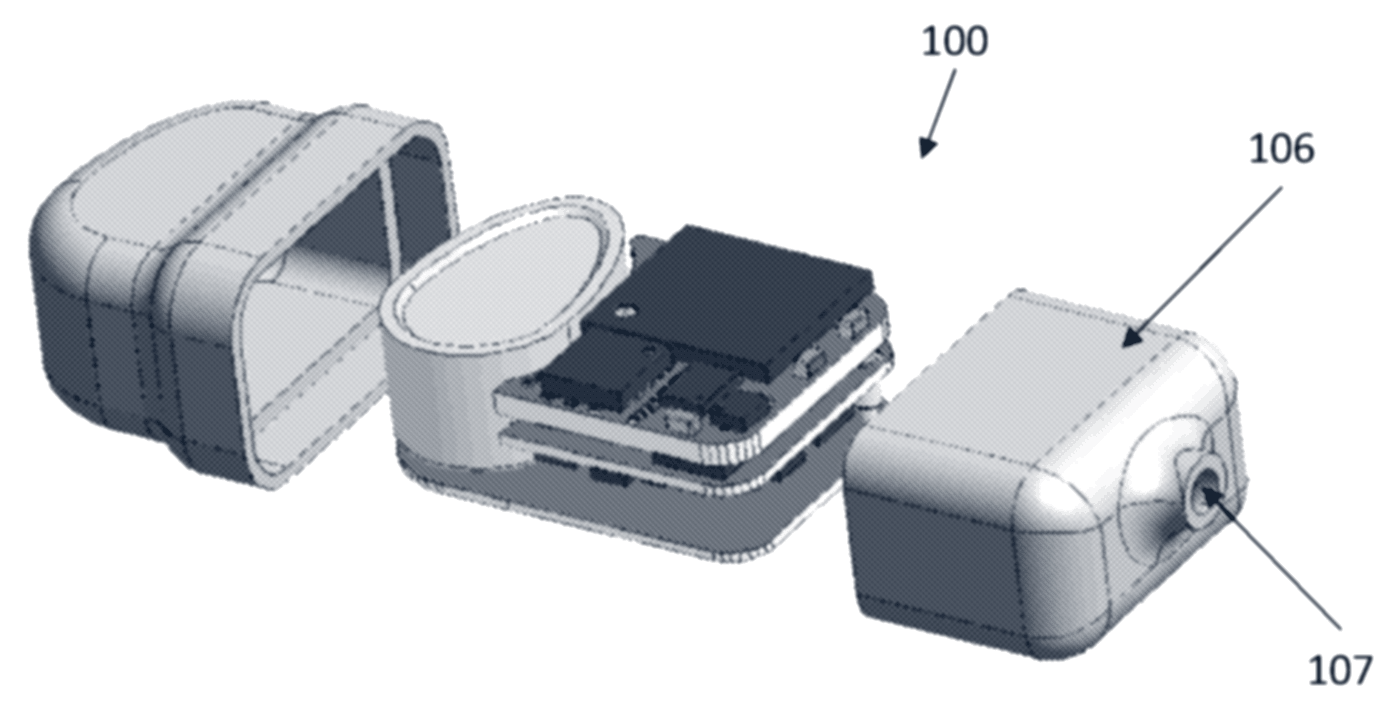
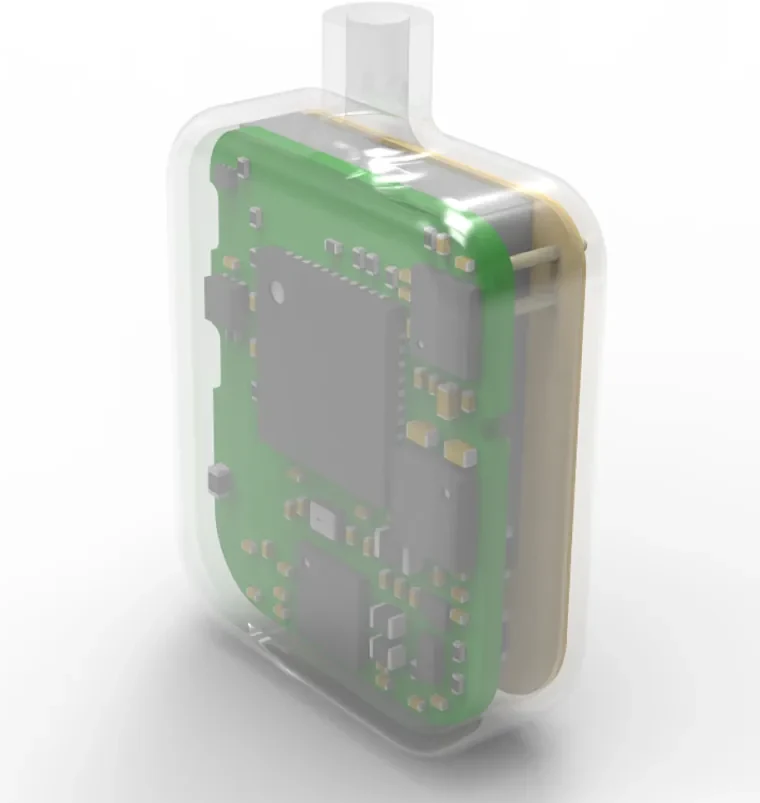
In the design described in our patent application, two housing segments close around the circuit boards and battery, and a feedthrough in one segment carries leads out through the wall. A conformal parylene-C coating is added during encapsulation, silicone relieves strain where the leads exit, and a polyester mesh on the housing gives the surgeon a suture anchor.
Next: 3D-printed enclosures that report on themselves
We are developing 3D-printed implant enclosures with built-in wireless monitoring of moisture inside the package.